

Why most people quit blogging within the first year
You started your blog with genuine enthusiasm. Maybe you had ideas you wanted to share, a side business to build, or simply something meaningful to say. You published a few posts, felt good about putting your thoughts out there, and then… life got busy.
Now it’s been weeks since your last post. Or maybe months. You log into your dashboard occasionally, see those abandoned drafts, and feel a familiar weight—part guilt, part uncertainty, part exhaustion at the thought of starting again.
If this sounds like you, you’re not alone. Research shows that approximately 80% of blogs are likely to fail within the first 18 months. That’s not a judgment or a failure on your part—it’s simply the reality of why most people quit blogging within the first year, and understanding the actual reasons can help you avoid the same outcome or restart more sustainably.
This isn’t another article telling you to “stay consistent” or “just push through.” Instead, we’re going to honestly examine the real, practical reasons busy people abandon their blogs—and more importantly, what you can do differently if you want yours to survive past that critical first year.
Who This Article Helps (And Who It Doesn’t)
This guide is for you if:
- You started a blog but struggle to maintain it consistently
- You’re thinking about quitting (or already have) and want to understand why
- You’re considering starting a blog and want to avoid common pitfalls
- You’re a busy person trying to blog around other life commitments
This might not help if:
- You run a professional blog with a team and resources
- You’re looking for get-rich-quick blogging strategies
- You need advanced SEO or monetization tactics
- You’ve never considered blogging and aren’t planning to start
The Real Statistics Behind Why People Quit Blogging
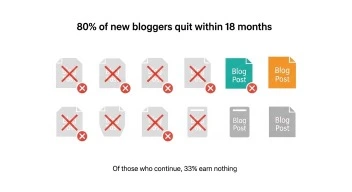
Before we examine specific reasons, let’s establish what the data actually tells us about blogging sustainability in 2026.
Approximately 80% of blogs fail within the first 18 months, yet three-quarters of bloggers who persist report that blogging is working for their brands. This creates an interesting paradox: most people quit, but those who stick with it generally see it pay off.
The problem isn’t that blogging doesn’t work—it’s that most people approach it with expectations, timelines, or methods that don’t match the reality of how blogging actually functions.
While 44% of bloggers plan to publish 3-6 posts monthly, 57% of those who post daily call themselves successful—yet 80% fail within 18 months. Even more telling, 33% of bloggers earn nothing from their blogs, which directly impacts motivation when blogging requires time and energy you don’t necessarily have to spare.
Understanding why people quit helps you build sustainable practices from the start—or recognize which adjustments might help if you’re already struggling.
Reason 1: Unrealistic Expectations About Timeline and Results

The number one reason people quit blogging within the first year isn’t lack of skill or talent—it’s expecting results far faster than blogging actually delivers.
The Three-Month Disappointment
Most new bloggers publish consistently for about three months, see minimal traffic or engagement, and conclude blogging “doesn’t work” for them.
Here’s what actually happens during those first few months: Very few pages—only about 5.7%—make it to the top 10 search results within a year. Your blog posts need time to get indexed by search engines, build any authority signals, and start appearing in results where people might actually find them.
Three months feels like forever when you’re putting in effort without visible return. But in blogging terms, three months is barely enough time for search engines to fully understand what your site is about, let alone rank it competitively for meaningful keywords.
The Traffic Growth Myth
Many beginners expect traffic to grow steadily from day one—publish a post, get some readers, publish another post, get more readers, and so on in a nice linear progression.
Real blogging growth looks nothing like this. You might publish ten posts and get almost no traffic. Then suddenly post eleven starts getting traction, which leads people to discover your older posts, and you see a spike. Then it plateaus again for weeks.
This unpredictable pattern frustrates people who expected predictable results, leading them to quit right before they might have seen breakthrough momentum.
The Monetization Timeline Disconnect
If you started blogging with income goals—maybe to replace your job eventually or earn extra money—the timeline mismatch between effort and earnings drives many people away.
While some bloggers eventually earn $100,000+ yearly, 33% earn nothing, and most who do earn significant income have been blogging for years, not months. The first year is typically about building foundation, not cashing checks.
When your expectations say “six months to profitable blog” but reality says “maybe year two or three if you persist and learn,” that disconnect creates the discouragement that leads to quitting.
Reason 2: The Overwhelming Pressure to Be Everywhere and Do Everything

Modern blogging advice often overwhelms rather than helps, creating a paralyzing sense that you need to master everything simultaneously to succeed.
The Myth of the “Complete” Blog Strategy
Scroll through blogging advice, and you’ll encounter demands that feel impossible for busy people:
- Write SEO-optimized posts of 2,000+ words
- Post consistently (daily or at minimum several times weekly)
- Be active on all social media platforms
- Build an email list and send regular newsletters
- Create Pinterest graphics for every post
- Engage with other bloggers’ content
- Update old posts regularly
- Learn keyword research
- Master analytics
That’s not a strategy—it’s a full-time job. For someone blogging around work, family, or other commitments, this comprehensive checklist doesn’t inspire—it exhausts before you even start.
The Comparison Trap
You look at successful bloggers who seem to effortlessly publish perfect posts three times weekly while maintaining an active Instagram, sending daily emails, and creating YouTube videos.
What you don’t see: many have been doing this for years, some work on their blogs full-time, others have teams or outsource tasks, and almost all struggled mightily during their first year before finding sustainable systems.
Comparing your beginning to someone else’s middle or end point creates impossible standards that make quitting feel like the only reasonable response to your “inadequacy.”
The Perfectionism Problem
Blogging advice emphasizes optimization, quality, and best practices—all valuable concepts that unfortunately morph into perfectionism for many beginners.
You write a draft, then research SEO, realize your post “needs work,” spend hours revising, second-guess your headline, redesign your images, and eventually either burn out before publishing or publish something that doesn’t feel “good enough” anyway.
Perfectionism dressed up as “best practices” kills more blogs than technical inability ever could.
Reason 3: Writing Feels Like Obligation Instead of Purpose
Many people start blogs with vague goals—”I should have a blog” or “everyone says blogging helps your business”—without clear personal reasons driving the work.
The Missing “Why”
If your primary motivation for blogging is external (you’re supposed to, it’s good marketing, you heard it builds authority), the work quickly feels like obligation rather than meaningful activity.
Without internal motivation—genuine interest in your topic, desire to help specific people, satisfaction from the writing process itself—you have nothing to sustain you through the inevitable rough patches when blogging feels hard and results feel distant.
Ask yourself honestly: why are you blogging? If the answer is primarily about outcomes (traffic, money, authority) rather than the activity itself, you’re setting yourself up for the frustration that leads to quitting.
Writing About Topics You Don’t Actually Care About
Some bloggers choose topics based entirely on perceived profitability or search volume rather than genuine interest or expertise.
You might start a personal finance blog because you heard it’s lucrative, despite not particularly enjoying thinking about money. Or a parenting blog because you have kids, even though writing about parenting doesn’t energize you.
Sustainable blogging requires enough interest in your subject that creating content feels rewarding in itself, not just a means to an end. When every post feels like pulling teeth because you don’t actually care about the topic, quitting becomes inevitable.
The Content Treadmill
Publishing feels like running on a treadmill that never stops—you publish one post, feel briefly accomplished, then immediately face pressure to create the next one.
For busy people, this creates exhausting mental overhead. Even when you’re not actively writing, you’re thinking about what you should be writing, feeling guilty about not writing, or dreading the next writing session.
When blogging becomes a treadmill rather than a meaningful project, most people eventually jump off.
If you’re feeling this pressure and need perspective on what blogging actually involves versus what you might be imposing on yourself, our article on what blogging involves when you have a full schedule breaks down realistic expectations.
Reason 4: The Isolation and Lack of Feedback Loop
Blogging often feels like shouting into the void, especially during the first year when readership is minimal and feedback is rare.
Publishing Without Readers
You pour time and thought into a post, hit publish, and… nothing. No comments, minimal views, maybe one like from your mom.
This absence of response doesn’t mean your content is bad—it’s simply how blogging works early on before you’ve built an audience. But psychologically, it’s draining.
Humans crave feedback and connection. When your blog provides neither for months on end, motivation naturally erodes.
No One to Share the Journey With
Unless you’re part of a blogging community or have blogger friends, the experience can feel profoundly lonely.
You don’t have people who understand why you’re excited about finally ranking for a keyword, or who can commiserate about writer’s block, or who get why you’re frustrated that a post you loved got no traction while a post you thought was mediocre performed well.
This isolation makes it harder to persist through challenges because you’re processing everything alone.
The Silence After Vulnerability
Writing honestly—especially about personal experiences, struggles, or opinions—requires vulnerability. When you publish something that felt meaningful or difficult to write and it’s met with silence, that silence stings.
After a few experiences of putting yourself out there and hearing nothing back, many people retreat into safer, more generic content that feels less risky but also less satisfying to create. Eventually, they quit because blogging no longer serves any meaningful purpose.
Reason 5: Life Gets Busy and Blogging Becomes Optional
For busy people juggling work, family, and other responsibilities, blogging almost always falls into the “optional” category—and optional activities get dropped first when life intensifies.
Blogging Versus Real Obligations
When your schedule gets squeezed, you naturally prioritize:
- Work that pays your bills now
- Family responsibilities
- Health and basic self-care
- Immediate deadlines
Blogging, which might pay off someday but isn’t urgent right now, slides down the priority list until it falls off entirely.
This isn’t weakness or lack of commitment—it’s logical prioritization when something has to give.
The Restart Friction
Once you’ve missed a week, restarting feels harder than continuing would have been. Miss two weeks, and the gap feels significant. Miss a month, and returning requires overcoming substantial psychological friction.
The longer the gap, the more guilt and pressure you feel about “getting back to it,” which paradoxically makes starting again even harder. Eventually, the abandoned blog becomes a source of shame you’d rather ignore than address.
No External Accountability
Unless you’ve committed to specific deadlines for specific people, blogging accountability is entirely internal. And internal accountability is notoriously unreliable when you’re exhausted or overwhelmed.
Without external consequences for not publishing—no boss demanding content, no clients expecting deliverables, no team counting on you—it’s far too easy to keep pushing blogging to “next week” indefinitely.
Reason 6: Unclear or Shifting Goals Create Direction Problems
Many bloggers start without clear goals or pivot frequently, creating confusion about what they’re actually trying to achieve.
Starting Without Defined Success Metrics
If you can’t articulate what success looks like for your blog, you can’t tell if you’re making progress, which makes persisting through difficulties nearly impossible.
Are you blogging to build an audience? Generate leads for your business? Establish authority in your field? Process your own thoughts? Create a portfolio? Each goal requires different approaches and timelines.
Without clarity, you wander aimlessly, trying everything and mastering nothing, until frustration leads to quitting.
Chasing Every New Strategy
The blogging world constantly presents new approaches: prioritize Pinterest, no wait focus on SEO, actually you need video content, forget all that and build your email list first.
When you lack clear goals, you chase every shiny strategy that promises results, never sticking with anything long enough to see it work. This constant pivoting wastes energy and prevents the consistency that actually drives results.
Eventually, you exhaust yourself trying every approach without committing to any of them.
Comparing Your Goals to Others’ Successes
You might have started blogging simply to document your learning or connect with like-minded people. But after seeing others monetize, you shift to pursuing income. Then you see someone building a massive audience and pivot to growth tactics.
This goal instability—constantly redefining what you’re trying to achieve based on what others are doing—prevents you from developing expertise in any single approach. The confusion and lack of progress that result often end in quitting.
Reason 7: The Technical and Logistical Friction
While not the primary reason most people quit, technical challenges and logistical friction add cumulative frustration that contributes to abandonment.
Platform and Hosting Confusion
Choosing between platforms, understanding hosting, dealing with WordPress plugins, managing domain names, troubleshooting broken links—the technical side of blogging overwhelms many beginners.
When you just want to write and share ideas, spending hours trying to figure out why your images won’t upload or your site is running slowly feels like wasted time that makes blogging not worth the hassle.
The Time Per Post Reality
It takes around 4 hours and 10 minutes on average to write a blog post. For busy people, finding four uninterrupted hours is nearly impossible.
The gap between how long you think a post should take (“I’ll write something quick this afternoon”) and how long it actually takes creates schedule chaos and deadline guilt when you consistently underestimate the time required.
Publication Overwhelm
Even after writing a post, you face publishing tasks: proofreading, formatting, adding images, writing meta descriptions, creating social media graphics, scheduling promotion.
Each task is small, but collectively they transform “writing a blog post” into a multi-hour project that busy people simply can’t sustain regularly.
What Successful Bloggers Do Differently

The minority of bloggers who make it past the first year don’t necessarily have more time, talent, or resources—they approach blogging differently in a few key ways.
They Start With Sustainable Frequency
Rather than trying to publish three times weekly because that’s what advice says, successful long-term bloggers find a rhythm they can actually maintain indefinitely—even if that’s only twice monthly.
Consistency matters more than frequency. Publishing reliably every other week for a year builds more momentum than publishing daily for three months then disappearing for six.
They Define Clear, Personal Goals
Bloggers who persist know specifically why they’re blogging and what success means for them personally, not based on someone else’s definition.
Maybe success is helping ten people monthly solve a problem you faced. Or building enough authority to attract speaking opportunities eventually. Or simply maintaining a writing practice you value.
Clear goals let you measure progress meaningfully and recognize when blogging is working even if results look different from others’ outcomes.
They Accept Imperfection and Publish Anyway
Successful bloggers understand that good-enough posts published regularly beat perfect posts that never go live.
They publish despite typos they’ll fix later. They share posts that could be more comprehensive. They accept that not every piece will be their best work, and that’s fine.
This willingness to publish imperfectly keeps them producing content when perfectionism would have frozen them into inaction.
They Build in Recovery Time
Bloggers who last understand they won’t always maintain their routine. Life happens. They miss weeks or even months.
The difference: they return without guilt spirals and without feeling they’ve “failed.” They treat breaks as normal parts of sustainable blogging rather than evidence they should quit entirely.
They Connect With Other Bloggers
Whether through online communities, blogger meetups, or simply relationships with a few other bloggers, successful long-term bloggers reduce isolation by building connections with people who understand the journey.
This support system provides encouragement during rough patches and celebrates wins that non-bloggers might not appreciate.
For practical guidance on returning after breaks without the guilt spiral, our article on how to resume blogging after a missed week offers specific steps for getting back on track.
What to Avoid If You Want to Last Past Year One
Certain approaches reliably contribute to first-year abandonment. Avoiding these patterns improves your odds of sustainable blogging.
Don’t Start With Monetization as Primary Goal
Blogs focused primarily on making money from day one often fail because the monetization timeline rarely matches expectations, creating crushing disappointment.
Build valuable content first. Let monetization emerge naturally once you’ve established consistent publishing and some readership. Reversing this order sets you up for the discouragement that leads to quitting.
Don’t Commit to Unsustainable Publishing Schedules
Promising yourself (or your audience) you’ll publish daily or even three times weekly when you have limited time creates failure conditions from the start.
It’s far better to commit to once monthly and consistently deliver than promise weekly posts and fall behind by week three, triggering the guilt-avoidance cycle that ends in abandonment.
Don’t Compare Your Beginning to Others’ Middles
Resist the urge to measure your three-month-old blog against someone’s three-year-old blog. The comparison is meaningless and destructive.
Your only valid comparison is yourself: are you better at blogging this month than last month? Is your newest post stronger than your first post? That’s the progress that matters.
Don’t Blog About Topics You Don’t Care About
No amount of potential traffic or income makes writing about subjects that bore you sustainable long-term.
If you don’t have some genuine interest in your blog’s topic—enough that creating content occasionally feels satisfying even without external rewards—find a different topic or accept that blogging might not be your best path right now.
Don’t Try to Master Everything Simultaneously
You don’t need perfect SEO, beautiful design, strategic Pinterest presence, active social media, and email marketing from day one.
Start with the basics: write useful posts and publish them consistently. Add other elements gradually once the core habit feels solid. Trying to do everything perfectly from the beginning overwhelms and exhausts.
The Final Thoughts
Understanding why most people quit blogging within the first year isn’t about judgment—it’s about clarity. The 80% who abandon their blogs aren’t lazy or uncommitted. They’re busy people who started with mismatched expectations, unsustainable approaches, or unclear goals that made quitting the logical outcome.
If you’re struggling with your blog right now, you haven’t failed. You’re simply experiencing the same challenges that derail most bloggers—challenges that are predictable, understandable, and addressable if you’re willing to adjust your approach.
The bloggers who make it past that critical first year don’t have magical discipline or unlimited time. They’ve simply figured out how to align their blogging practice with reality: realistic timelines, sustainable frequency, clear personal goals, and enough flexibility to keep going through inevitable rough patches.
You can be in that minority group. Not by trying harder or pushing through when everything feels wrong, but by building a blogging practice that actually works for your life, your schedule, and your genuine reasons for wanting to share your voice with the world.
The question isn’t whether you have what it takes to be a “successful blogger” by someone else’s definition. It’s whether you can create a sustainable blogging practice that serves your goals and fits your life well enough that you’re still doing it a year from now—even if what you’re doing looks different from what blogging gurus say you “should” be doing.
That’s the difference between becoming another statistic in the 80% who quit and joining the bloggers who persist long enough to see blogging actually work.
Our Authority Sources
This article draws on research and data from established blogging industry sources:
Wix Blog – Blogging Statistics and Facts for 2026 – Comprehensive blogging industry data including failure rates, publishing frequency, and success metrics from a major website platform provider with access to usage data across millions of blogs.
Orbit Media Studios – Content Promotion Statistics To Help You Be a Better Blogger
Backlinko – Blogging Statistics – Research-backed statistics on blogging performance, SEO results, and content trends from an established authority in search engine optimization and content marketing.
TwinStrata/Blogging Statistics – Aggregated data on blogging growth, monetization, and industry trends providing broader context about where blogging stands in 2026.