

Blogging efficiently
You want to blog, but between work, family, and everything else demanding your attention, finding hours to write feels impossible.
The advice you see online doesn’t help. “Batch your content!” they say, as if you have entire Sundays free. “Write daily!” as though your mornings aren’t already chaotic. “Just wake up earlier!” because apparently sleep is optional.
This article takes a different approach. We’re not going to pretend you have time you don’t have, or suggest you sacrifice sleep and sanity for your blog. Instead, we’ll look at practical strategies for blogging efficiently when your free time is genuinely limited.
You’ll learn how to make real progress in small pockets of time, which tasks actually matter versus which ones just feel productive, and how to build a blogging practice that fits around your life instead of consuming it.
Who This Article Is For (And Who It’s Not For)
This guide is for you if:
- You have 30 minutes to 2 hours per week for blogging (not per day)
- You’re juggling a full-time job, family responsibilities, or other major commitments
- You want to blog consistently without it taking over your life
- You’re willing to accept slower growth in exchange for sustainability
This might not be for you if:
- You have 10+ hours per week available for blogging
- You’re treating your blog as a full-time business from day one
- You want rapid growth and are willing to sacrifice other areas of life temporarily
- You’re looking for shortcuts that promise results without any real effort
Why Traditional Blogging Advice Fails Busy People
Most blogging guidance assumes you have predictable blocks of free time. The typical advice looks something like this: set aside 3-4 hours on Saturday morning, write your post in one sitting, edit it Sunday afternoon, publish Monday morning.
This works great if your Saturdays are reliably free and your energy levels are predictable. For most people with full lives, neither assumption holds true.
Your available time appears in fragments. Twenty minutes while dinner cooks. Forty minutes during your lunch break. An hour on Tuesday evening when your meeting gets cancelled. These scattered moments don’t fit the traditional blogging workflow, so you end up feeling like you can’t blog “properly.”
The solution isn’t finding more time—it’s redesigning your blogging process to work with the time you actually have.
The Core Principle: Fragmented Work Over Perfect Sessions
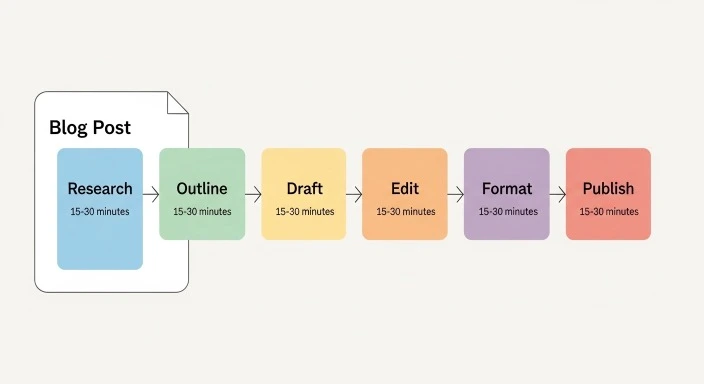
Blogging efficiently with minimal free time requires embracing a fundamental shift in how you approach the work.
Traditional approach: Complete entire posts in dedicated writing sessions.
Time-efficient approach: Break posts into discrete tasks you can complete in 15-30 minute increments.
This isn’t just about “finding small pockets of time”—it’s about restructuring your entire blogging workflow so that progress happens in fragments rather than requiring long, uninterrupted focus.
How Fragmented Blogging Actually Works
Instead of treating a blog post as a single large task, you divide it into smaller components that can be completed independently:
Research phase: 15-20 minutes gathering sources, taking notes on key points, collecting relevant data or examples.
Outline phase: 10-15 minutes organizing your research into a logical structure with headers and main points.
Drafting phase: Multiple 20-30 minute sessions writing specific sections (you don’t write the entire post at once).
Editing phase: 15-20 minutes revising one section, checking for clarity, fixing obvious errors.
Formatting phase: 10-15 minutes adding images, links, formatting headers, optimizing for readability.
Publishing phase: 5-10 minutes final review, SEO check, scheduling or publishing.
Each task is small enough to fit into the random pockets of time that appear in your schedule. You make genuine progress even when you only have 20 minutes available.
Building a System That Works in Small Increments
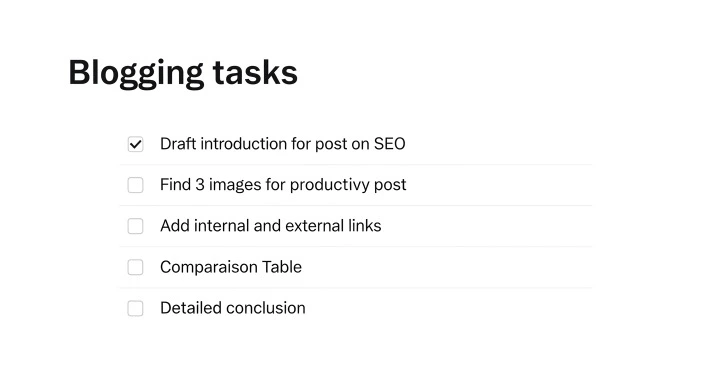
Systems matter more than motivation when time is scarce. You need a setup that removes friction and makes it easy to jump in and out of work quickly.
Creating Your Task Bank
Keep a running list of small, specific blogging tasks that you can tackle whenever time appears. This eliminates the “what should I work on?” question that wastes precious minutes.
Your task bank might include:
- Research competitor posts on [specific topic]
- Outline the structure for [post title]
- Write the introduction for [post]
- Draft the “Common Mistakes” section
- Find and download 3 images for [post]
- Edit the first half of [post]
- Add internal links to [post]
- Write meta description and optimize SEO
When you have 25 minutes unexpectedly free, you consult your task bank and immediately know what to work on. No decision fatigue, no wasted startup time.
Setting Up Quick-Start Files
Create a simple system where you can resume work instantly without trying to remember where you left off.
Many bloggers use a basic Google Doc or Notion page for each post-in-progress with clear sections:
- Working title
- Target keyword
- Research notes and sources
- Outline
- Draft sections
- Images needed
- Internal links to add
- Publishing checklist
When you sit down with 20 minutes available, you open the file and immediately see what needs doing next. When time runs out, you note where you stopped so you can pick up seamlessly next time.
According to research from the Content Marketing Institute, bloggers who use documented workflows complete posts 40% faster than those working without clear processes. The system itself becomes your productivity tool.
Batching Similar Tasks
While you might not have time to batch entire weeks of content, you can batch similar micro-tasks together for efficiency.
If you have 30 minutes on Wednesday, spend it entirely on research for your next three post ideas. If you have 45 minutes Friday, use it all for drafting sections across multiple posts rather than trying to finish one complete post.
This approach works because your brain doesn’t have to switch contexts repeatedly. You stay in “research mode” or “drafting mode” rather than jumping between different types of thinking.
Maximizing Output in Minimal Time Blocks
When your available time is measured in minutes rather than hours, every minute needs to count. Here’s how to get meaningful work done in short sessions.
The 15-Minute Task Test
Any blogging task should be completable in 15-30 minutes when properly scoped. If it’s not, break it down further.
“Write blog post” is too large for a 30-minute session. But “write the three-paragraph introduction” fits perfectly.
“Do keyword research” is too vague and open-ended. But “identify 5 related keywords using Ubersuggest” is concrete and achievable.
This granular approach to task definition makes every small time pocket usable.
Eliminating Low-Value Activities
When time is scarce, you must ruthlessly eliminate tasks that feel productive but don’t actually move your blog forward.
Low-value activities that busy bloggers should skip or minimize:
Endlessly tweaking your site design. Your theme is fine. Readers care about your content, not whether your sidebar is perfectly aligned.
Researching “perfect” plugins. Choose well-reviewed options that solve your problem and move on. Comparing twelve different contact form plugins wastes time you could spend writing.
Obsessing over the ideal posting time. Publishing consistency matters infinitely more than whether you post at 6 AM or 2 PM on Tuesdays.
Perfecting posts that are already good enough. Your 8th round of editing rarely improves a post as much as starting your next one would.
Creating elaborate content calendars. A simple list of topic ideas works fine when you’re publishing monthly or bi-weekly.
According to Orbit Media’s blogging survey, the average blogger spends 20% of their time on activities that don’t directly produce or promote content. When you only have a few hours per week total, you can’t afford that waste.
Using Dead Time Strategically
Some blogging tasks don’t require a computer or focused concentration. Use these for genuinely dead moments in your day.
Brainstorm post ideas during your commute (voice record them for later).
Mentally outline your next post while exercising or doing routine household tasks.
Review and edit drafts on your phone during waiting time (doctor’s office, waiting for kids, standing in line).
Respond to blog comments using your phone during lunch breaks.
These moments don’t replace dedicated writing time, but they keep your blog moving forward when you can’t sit at your computer.
Writing Faster Without Sacrificing Quality
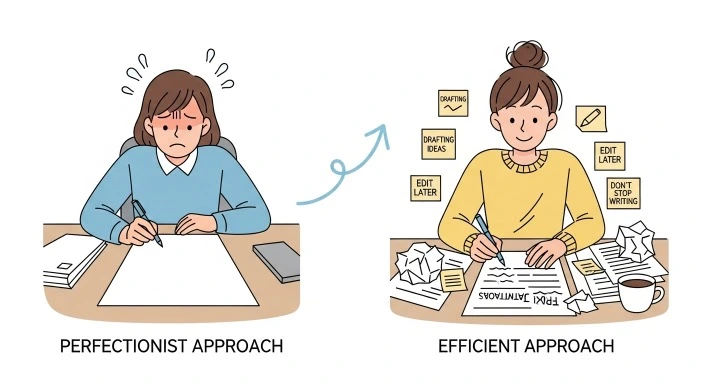
Speed and quality aren’t opposites—they just require different approaches than you might think.
The Power of Talking It Out First
Many people can speak their ideas much faster than they can write them. Use this to your advantage.
Before writing a section, open a voice recorder app and explain the key points out loud as if you’re talking to a friend. Speak for 3-5 minutes on one section of your post.
Then transcribe the audio (many free tools do this reasonably well, or you can type while listening). You’ll have a rough draft that captures your natural voice and main ideas. Now you’re editing rather than creating from scratch, which typically goes much faster.
This technique works especially well for busy people because speaking feels easier when you’re tired. You can “write” a section by talking into your phone while folding laundry or cooking—times when sitting down to type would be impossible.
Writing Imperfect First Drafts Quickly
Your first draft’s job is to exist, not to be good. Many bloggers waste enormous amounts of time trying to write perfectly polished first drafts.
Give yourself explicit permission to write badly. Include placeholders like [add example here] or [find statistic] rather than stopping your momentum to research mid-draft.
Turn off your internal editor completely during drafting sessions. Don’t reread previous paragraphs. Don’t fix typos. Don’t rearrange sentences. Just get words on the page following your outline.
You’ll edit later—that’s a separate task with separate time allocated. Trying to draft and edit simultaneously doubles the time required.
Using Templates for Recurring Elements
Create simple templates for parts of posts you write repeatedly. This eliminates decision-making and speeds up both drafting and formatting.
Templates might include:
- Standard introduction structure (hook, problem statement, what readers will learn)
- FAQ section format
- Conclusion framework (summary, call-to-action, encouragement)
- Image caption style
- Internal linking phrases
When you sit down to write an introduction, you’re not starting from a blank page wondering how to begin—you’re filling in a proven structure that you know works.
Strategic Shortcuts That Maintain Quality
Efficiency often comes from knowing what you can simplify without compromising the value you provide readers.
Shorter Posts Are Perfectly Valid
The blogging industry has developed an obsession with 2,000+ word posts because longer content often ranks well in search engines. But this creates a false belief that every post must be comprehensive to be valuable.
A focused 800-word post that directly answers a specific question serves readers better than a 2,500-word post padded with tangents to hit a word count target.
When time is limited, aim for thorough coverage of a narrow topic rather than surface coverage of a broad topic. “Five Ways to Overcome Writer’s Block When Blogging” is more achievable and often more useful than “The Complete Guide to Writing Blog Posts.”
Your goal is to fully answer the question your headline promises, then stop. Additional content beyond that point rarely increases value proportionally to the time invested.
Repurposing and Updating Over Always Creating New
Creating fresh content from scratch isn’t always the best use of limited time. Sometimes updating or expanding existing posts delivers more value with less effort.
If you have a post from eight months ago that gets steady traffic, spending 45 minutes updating it with new information, adding a new section, and improving its SEO might serve your readers better than writing an entirely new post.
You can also create new posts by:
- Expanding a section from an existing post into its own detailed article
- Combining insights from three related older posts into one comprehensive piece
- Taking a complex post and breaking it into a series of simpler, focused posts
This approach respects your time constraints while building a stronger, more interconnected content library.
Accepting “Good Enough” for Non-Critical Elements
Perfectionism is the enemy of efficiency. Identify which elements of your posts genuinely impact reader value, and which are just nice-to-have details.
Elements worth getting right:
- Clear, accurate information that solves the promised problem
- Logical organization that’s easy to follow
- Readable formatting with appropriate headers
- Basic proofreading for clarity
Elements where “good enough” is fine:
- Perfect grammar and punctuation (clarity matters more)
- Custom graphics for every post (stock photos work fine)
- Perfectly optimized SEO (basic optimization is plenty)
- Elaborate formatting and design flourishes
Every minute you spend perfecting a non-critical element is a minute you’re not spending on creating new value or actually publishing your work. Understanding this difference is essential for blogging efficiently when you have minimal free time.
Building Consistency Without Daily Commitment
Consistency matters for blogging success, but consistency doesn’t mean posting daily or even weekly when your time is genuinely limited.
Defining Realistic Consistency
Consistency means publishing on a predictable schedule that you can actually maintain, even if that schedule is “one post per month” or “two posts every three weeks.”
A blog that publishes quality posts every two weeks for two years will outperform a blog that publishes daily for two months then abandons the effort. Your readers (and search engines) care more about reliability over time than frequency.
Set a publishing schedule based on how long posts realistically take you to complete, not on what blogging gurus claim you “should” be doing. If completing one solid post requires 4-6 hours of total work time, and you have 5-6 hours available monthly for blogging, publishing monthly is your sustainable pace.
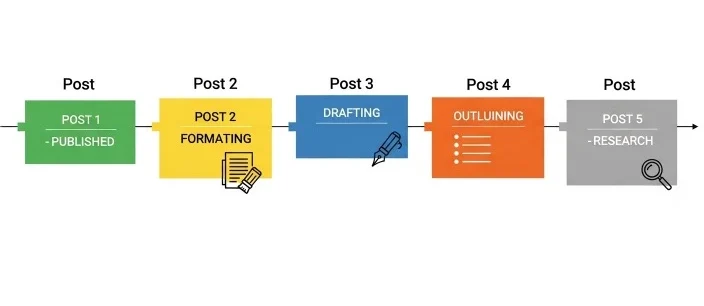
The Rolling Draft System
Instead of working on one post from start to finish, maintain 3-5 posts in various stages of completion simultaneously.
Here’s how this works in practice:
Post A is in the research phase. You spend 20 minutes gathering sources.
Post B has a complete outline. You spend 30 minutes drafting one section.
Post C is mostly drafted. You spend 25 minutes editing and polishing.
Post D is complete and needs formatting. You spend 15 minutes adding images and links.
Post E is ready to publish. You spend 10 minutes on final review and scheduling.
This rolling system means you always have something ready or nearly ready to publish, even if your available time fluctuates week to week. When you suddenly have an extra hour, you can push multiple posts forward rather than getting stuck waiting to finish one post before starting another.
Building Buffer Posts
When you do have slightly more time or energy one week, use it to build a buffer of completed posts scheduled for future publication.
Having 2-3 finished posts queued up for upcoming weeks provides enormous peace of mind. If life gets chaotic and you can’t work on your blog for two weeks, your publishing schedule doesn’t skip a beat.
This buffer also removes the pressure of racing to finish posts right before publication deadlines—a pressure that often leads to burnout or lowered quality.
What to Avoid When Blogging With Limited Time
Certain approaches seem logical but actually make efficient blogging harder when your time is genuinely constrained.
Don’t Try to Emulate Full-Time Bloggers
People who blog for 20-40 hours per week use different strategies than people who blog for 2-4 hours per week. Their advice often doesn’t translate to your situation.
They can afford to experiment extensively with different content formats. You need to stick with what works.
They can maintain presence on five social platforms. You need to choose one or simply rely on search traffic.
They can produce daily or multiple-weekly posts. You’re working toward monthly or bi-weekly consistency.
Their playbook doesn’t fit your constraints. Stop measuring yourself against people operating in completely different circumstances.
Don’t Chase Every Trend or Platform
New blogging tools, platforms, and strategies emerge constantly. Most aren’t worth your limited attention.
When you see advice about starting a podcast to complement your blog, or creating video content, or building a TikTok presence—pause and ask: “Does this serve my core goal of publishing helpful blog posts consistently?”
Usually the answer is no. Additional content formats and platforms fragment your already limited time. Master one thing (blogging) before adding complexity.
Don’t Pursue Monetization Prematurely
Making money from your blog is a valid goal, but pursuing it too early wastes time and creates pressure that works against efficiency.
Most monetization strategies (affiliate marketing, sponsored posts, selling products, running ads) require significant traffic to generate meaningful income. Building that traffic requires consistent publishing over 12-24 months for most blogs.
Spending time setting up elaborate monetization systems when you have 50 monthly visitors doesn’t make sense. That time would be better invested creating the content that builds the audience you’ll eventually monetize.
Focus on publishing consistency first. Monetization becomes easier and more profitable once you have established traffic.
Don’t Obsess Over Analytics Early On
Checking your traffic stats daily when you’re publishing monthly and have minimal traffic serves no purpose except to discourage you.
Your numbers will be small initially. This is normal and expected. Looking at them frequently doesn’t change them—it just makes you feel bad about perfectly normal early-stage blog metrics.
Set a monthly date to review your analytics. Look for trends over months, not days. Focus on whether specific posts are finding audiences, not on daily visitor fluctuations.
Frequently Asked Questions
How long should it take to write a blog post when time is limited?
With a fragmented approach, most bloggers working in 15-30 minute sessions can complete a 1,000-1,500 word post in 4-6 total hours of work spread across 2-3 weeks. This includes research, drafting, editing, and formatting. Your speed will improve with practice—experienced bloggers often reduce this to 3-4 hours for similar length posts. Don’t compare your early posts’ time requirements to established bloggers’ efficiency.
Is it better to publish one great post monthly or multiple okay posts?
For busy bloggers, one well-researched, genuinely helpful post per month significantly outperforms three rushed, mediocre posts. Quality drives search rankings, reader trust, and long-term traffic growth. Your limited time is better invested ensuring each post thoroughly answers its promised question rather than increasing publishing frequency at the expense of usefulness.
Can I really build a successful blog working only a few hours per week?
Yes, though your timeline for “success” extends longer than full-time bloggers experience. Many successful blogs were built by people working 3-5 hours weekly over 2-3 years. The key is maintaining that modest but consistent effort over time rather than intense bursts followed by abandonment. Define success realistically for your timeframe—500 monthly visitors after one year of part-time blogging represents genuine progress.
Should I write posts entirely on my phone when that’s my only available time?
Writing complete posts on phones works for some people but frustrates others due to slower typing and limited screen space. A better approach: use phone time for specific mobile-friendly tasks like outlining, light editing of already-drafted sections, brainstorming ideas, or responding to comments. Reserve actual drafting for times when you have computer access, even if those sessions are brief.
How do I stay motivated when progress feels impossibly slow?
Shift your focus from outcome metrics (traffic, followers, income) to process metrics you fully control (posts published, topics researched, skills improved). Celebrate completing your monthly post regardless of how many people read it. Progress compounds slowly but reliably—your 12th post benefits from the foundation your first 11 posts built. Trust the process rather than demanding visible results on your preferred timeline.
Final Thoughts: Moving Forward With What You Have
Blogging efficiently when you have minimal free time isn’t about discovering magical productivity hacks or squeezing more hours from your days.
It’s about building a sustainable system that acknowledges your real constraints and works within them. It’s about breaking tasks into manageable pieces, eliminating low-value activities, and accepting that slower progress is still progress.
Your blog won’t grow as quickly as someone who can dedicate 15 hours weekly to content creation. That’s okay. You’re not competing with them—you’re building something that fits into your actual life.
Start with the smallest viable commitment: one post every four weeks. Create your task bank. Set up your quick-start files. Block just 30 minutes twice weekly to work through those small tasks.
That’s enough to make real progress. That’s enough to build something meaningful over time. And most importantly, that’s something you can actually sustain without burning out or sacrificing the other parts of your life that matter.
The blog you maintain for two years while working a few hours weekly will serve you better than the blog you abandon after three months of unsustainable effort. Choose sustainability over speed, and trust that consistency—even modest consistency—eventually compounds into something substantial.
Read our article : What Blogging Really Involves
Our Authority Sources
This article draws on research and insights from established authorities in content marketing, productivity, and blogging best practices:
Content Marketing Institute – Leading resource for content marketing research and strategy, providing annual studies on blogger workflows, time investment, and efficiency practices based on surveys of thousands of content creators.
Orbit Media Studios – Conducts the largest annual survey of bloggers, tracking trends in time investment, post length, publishing frequency, and blogging practices. Their data-driven insights offer realistic benchmarks for bloggers at all experience levels.
RescueTime – Productivity research company that studies how knowledge workers spend their time, offering data-backed insights into focused work, context switching, and time management strategies applicable to blogging workflows.